Top 10 Robots in China (2025 Edition): Innovation, AI & Humanoids
China’s robotics landscape is on fire in 2025. Whether it’s sleek humanoid robots walking into factories or intelligent AI-powered machines serving in hotels, Chinese robotics is no longer just a dream — it's a fast-moving reality. With massive investment, supportive government policies, and highly capable startups, China is making major moves in the field.
Here are the Top 10 Robots in China (2025) that are pushing the boundaries — and what makes them special.
1. Walker S2 (UBTech)
UBTech has grabbed headlines with its Walker S2 — a tall humanoid robot (1.76 m) that can carry loads, squat, and move fluidly. What really makes it shine is that it can swap its own battery, allowing continuous operation.
Why it’s a big deal: Walker S2 is positioned for industrial settings and repetitive tasks.
Human angle: Imagine a robot working alongside humans all day without fatigue.
2. Unitree G1
Unitree Robotics is making waves with the G1 humanoid, agile enough to perform kung fu-style moves and high kicks.
Why it's exciting: Combines physical agility with AI to handle dynamic real-world tasks.
Human angle: A robot capable of martial arts hints at future versatility and adaptability.
3. AgiBot General-Purpose Robot
AgiBot (Zhiyuan) reached a major milestone in 2025: 1,000 units produced. Using cloud-based AI and “brain-like” architecture, it exhibits intelligent, adaptive behavior.
Why it's a game-changer: Mass production makes advanced humanoids more affordable.
Human angle: Can serve as helpers, coworkers, or assistants across industries.
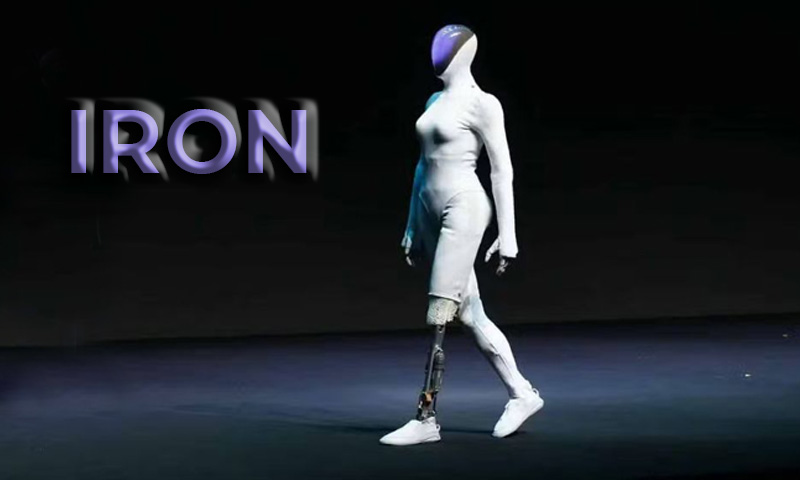
4. Iron (XPeng)
XPeng introduced Iron, a humanoid robot with 60+ joints and dexterous hands, leveraging XPeng’s automotive and AI expertise.
Why it's important: Demonstrates crossover of automotive tech into robotics innovation.
Human angle: Could assist in factories and eventually everyday tasks.
5. LimX Oli
LimX Dynamics unveiled Oli, a modular humanoid with 31 degrees of freedom, designed for adaptability and easy maintenance.
Why it stands out: Modular design allows customization for different tasks.
Human angle: A robot you can upgrade and adapt like a real teammate.
6. Cyborg R01
From Cyborg Robotics, R01 is a heavy-duty humanoid with 62 degrees of freedom, built for industrial environments.
Why it matters: Can lift, manipulate, and perform tasks too dangerous for humans.
Human angle: Strong and precise, built for real-world applications.
7. Zerith H1
Zerith’s H1 humanoid is designed for hotels, handling cleaning, restocking, and maintenance tasks.
Why it’s innovative: Addresses labor shortages and improves consistency in service.
Human angle: Friendly hotel robot assisting staff and guests alike.
8. Leju Humanoids (AELOS, KUAVO, PANDO)
Leju Robotics produces humanoids like AELOS, KUAVO, and PANDO, scaling production to over 100 full-size robots in 2025.
Why it’s relevant: Demonstrates manufacturing scale and market readiness.
Human angle: From labs to workplaces, humanoids become practical companions.
9. Vision-Powered Industrial Robots (Mech-Mind)
Mech-Mind Robotics provides AI vision systems enabling robots to see, recognize, and manipulate objects efficiently.
Why it matters: Vision enhances industrial robot intelligence and flexibility.
Human angle: Makes automation smarter, safer, and adaptable.
10. AgiBot Yuanzheng A2 (or Lite3)
Yuanzheng A2 and Lite3 are multimodal robots with voice, vision, and touch interactions, shown at WAIC 2025.
Why it’s a highlight: Demonstrates “embodied AI” for social and service settings.
Human angle: Robots that interact naturally in exhibitions, hotels, and smart buildings.
Why China’s Robots Are Leading in 2025
- Massive Scale: Hundreds of thousands of industrial robots installed yearly.
- Government Support: Strong policies backing AI + robotics.
- Diverse Innovation: Humanoids, service robots, vision-based industrial systems.
- Production Focus: Scaling beyond prototypes to real products.
- Real-World Applications: Practical robots in factories, hotels, logistics.
Challenges & Future Outlook
- Cost & Adoption: High price still limits widespread use.
- Regulation & Safety: Standards must evolve for public and industrial use.
- Talent & Ecosystem: Need for skilled engineers and local components.
- Human-Robot Interaction: Robots must be intuitive, safe, and trustworthy.
By 2026–2030, robots in China will be smarter, more affordable, and integrated into daily life.
Conclusion
From agile humanoids to AI-powered industrial machines, China’s top robots in 2025 are not just prototypes — they are shaping the future. These robots showcase innovation, scalability, and practical impact.
Which Chinese robot surprises you the most? Share your thoughts in the comments below!
Comments
Post a Comment